
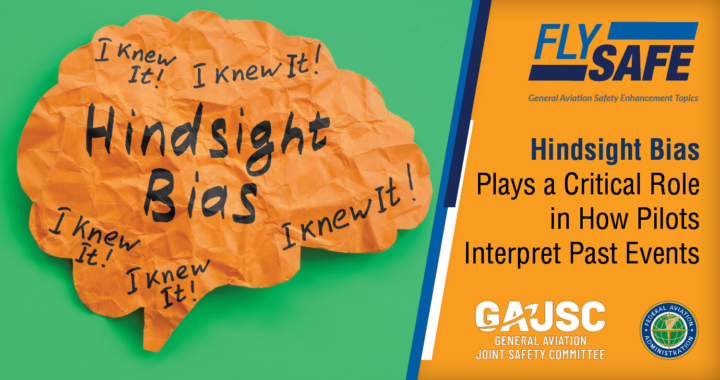
The General Aviation Joint Safety Committee (GAJSC) has identified human biases as significant factors in aviation accidents. One such bias, known as hindsight bias, plays a critical role in how pilots interpret past events and learn from others’ mistakes. Understanding this bias is important to improving aviation safety.
What is Hindsight Bias?
Hindsight bias refers to the tendency to view past events as more predictable than they actually were, leading individuals to believe they “knew it would happen” after the fact. This mindset can obscure the lessons learned from accidents and prevent pilots from fully understanding the underlying causes. Philosopher Soren Kierkegaard aptly noted that life must be lived forwards but can only be understood backwards, highlighting the challenge of learning from past experiences.
Hindsight bias can often lead to overconfidence, as pilots may dismiss the likelihood of similar accidents occurring to them. This bias can hinder their ability to reflect on their vulnerabilities and areas for improvement.
Best Practices for Mitigating and Overcoming Hindsight Bias
To counteract hindsight bias, pilots should adopt a mindset that acknowledges the possibility of similar accidents happening to them. By actively considering how these events could occur in their own flying experiences, pilots can identify preventive measures and improve their decision-making processes. It is crucial to understand the operational environment and the context in which the accident pilot was making decisions, and to assess how a pilot with similar experience might perceive and react to those circumstances.
Reflecting on personal actions in similar situations can foster a proactive safety mindset. Pilots should continuously evaluate their skills and knowledge, remain open to learning, and engage in discussions about potential hazards and ways to mitigate them. This approach encourages a thorough understanding of the factors leading to accidents and promotes a culture of safety.
By understanding and addressing hindsight bias, GA pilots can enhance their ability to learn from past mistakes, reduce overconfidence, and prevent future accidents. Cultivating an awareness of this bias and actively working to mitigate its effects are crucial steps toward improving aviation safety and proficiency.