
The General Aviation Joint Safety Committee (GAJSC) has long advocated the benefits of proficiency training for certificated pilots. Pilots who want to bring their “A” game to the airport every time they fly know that they need to regularly practice fundamental flying skills. However, maintaining proficiency can also be achieved by learning something new.
Receiving some tailwheel aircraft instruction, or pursuing a tailwheel endorsement, is a good way to expand your aviation horizons and learn a new skill. Flying a taildragger will test your stick and rudder skills as well as build up your rudder discipline. Let’s take a brief look at some of the noticeable differences and unique handling characteristics of a tailwheel design.
Tailwheel Types
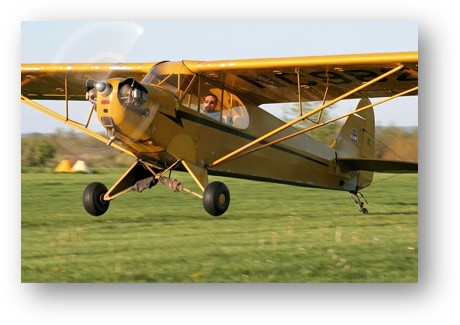
There are three main types of tailwheel designs.
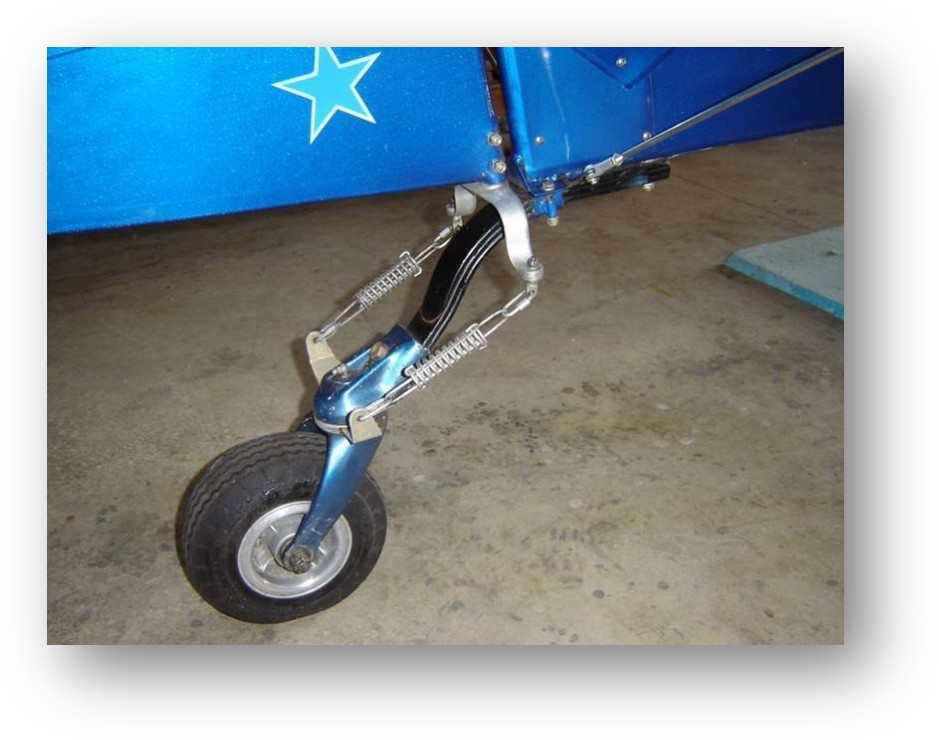
- Steerable/Swiveling tailwheels are connected to the rudder (via springs, chains, or links) and are usually a steerable-breakaway style. These tailwheels employ an engaged ‘caster’ mechanism which allows a steering arc of 16 to 18 degrees either side of center, and then becomes full swiveling when turned to a greater angle.
- Locking tailwheels are generally found on larger airplanes like the AT-6 or a DC-3 and they may be retractable. They are sometimes installed in smaller aircraft such as the Cessna 185.
- Castering tailwheels rotate freely, are not connected to the rudder, and cannot be locked into position. These are often found on lighter experimental aircraft.
Tailwheel Design and Performance Advantages
Tailwheels are located much farther from an aircraft’s center of gravity compared to nosewheels. As a result, they bear less weight and do not need to be as sturdy as nosewheels. This may contribute to overall weight savings and provide some taildraggers with greater useful loads and higher cruise speeds than their nosewheel equivalents.
Tailwheel aircraft are also better for operations on unimproved surfaces because aircraft weight is distributed over a larger area. Additionally, the trailing arm moment realized with a tailwheel aircraft lessens the chances of a nose over in unimproved or turf operations. And of course, tailwheel configurations usually provide much greater propeller clearance.
Conventional Wisdom
While there are many benefits to having a tailwheel, there are some operational considerations to keep in mind. Among these is directional control. Because of the relative placement of the main gear and the CG, tailwheel aircraft are inherently unstable on the ground. As taxi turns are started, the aircraft can pivot on one or the other of the main wheels. From that point, with the CG aft of that pivot point, the forward momentum of the plane acts to continue and even tighten the turn without further steering inputs. Ordinarily, removal of rudder pressure does not stop a turn that has been started, and it is necessary to apply an opposite input (opposite rudder) to bring the aircraft back to straight-line travel. Frequent small corrections are required to follow the taxi route.
Since a tailwheel aircraft assumes a nose-high attitude on the ground, it often restricts the pilot’s vision in front of the aircraft. This requires pilots to taxi using a series of small Zig-Zag or S-turns to clear the area ahead. With a little practice in calm wind conditions and a commitment to going slow, transitioning pilots can soon taxi with precision and confidence.
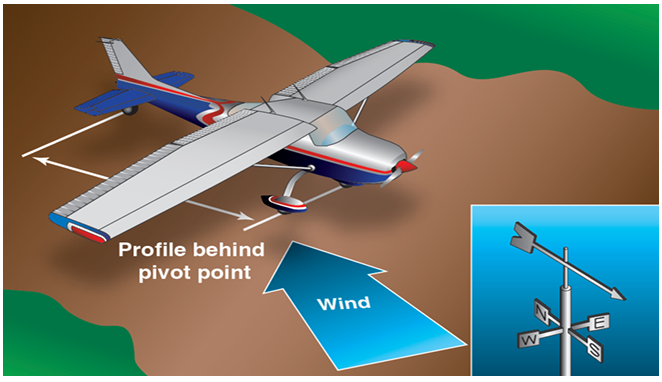
Another challenge for tailwheel airplanes is that they have an exaggerated tendency to weathervane, or turn into the wind, when operated on the ground in crosswinds. This tendency is greatest when taxiing with a direct crosswind, a factor that makes maintaining directional control more challenging, sometimes requiring the use of the brakes when tailwheel steering alone proves inadequate to counteract the weathervane effect. Once again, small, timely corrections are the key to success.
How to Get Started
Unless you already know or have been referred to a tailwheel instructor, you’ll need to research your options. Asking local tailwheel pilots for recommendations is a good place to start. Local EAA Chapters and type clubs are also great sources for flight instructor referrals. Obviously, you’ll want an instructor who is experienced in the aircraft, and ideally, you’ll want someone with a proven record of student accomplishments.
The Regulations
The regulations for a tailwheel endorsement are found in 14 CFR § 61.31(i). Flight training requires the following:
- Normal and crosswind takeoffs and landings
- Wheel landings (where appropriate for the aircraft)
- Go-around procedures
The rule also states that you must receive training and a logbook sign-off from an authorized flight instructor who finds you proficient to act as pilot in command of a tailwheel airplane. There are no minimum of flight or ground training hours.
Additional Resources
Airplane Flying Handbook (3C) Chapter 14, Transition to Tailwheel Airplanes