|
|
|
Vol. 3, No. 3 Summer 2026
|
|

|
|
|
|
Welcome to the latest edition of the General Aviation Joint Safety Committee's (GAJSC) quarterly newsletter, the FlySafe Flyer! This newsletter is intended to keep you apprised of GAJSC-related news and updates, as well as relevant safety information that impacts the general aviation community. The FlySafe Flyer also aims to convey the GAJSC's purpose and collaborative role in advancing aviation safety. We encourage you to read and share this content with your fellow airmen. Please copy the link here to share. For a list of previous newsletters, go to gajsc.org/newsletter.
|
|
|
|
|
|
AirVenture Tales
|
A Welcome Message from Dr. Susan Northrup, FAA Federal Air Surgeon and GAJSC Co-Chair
|
|
|
|
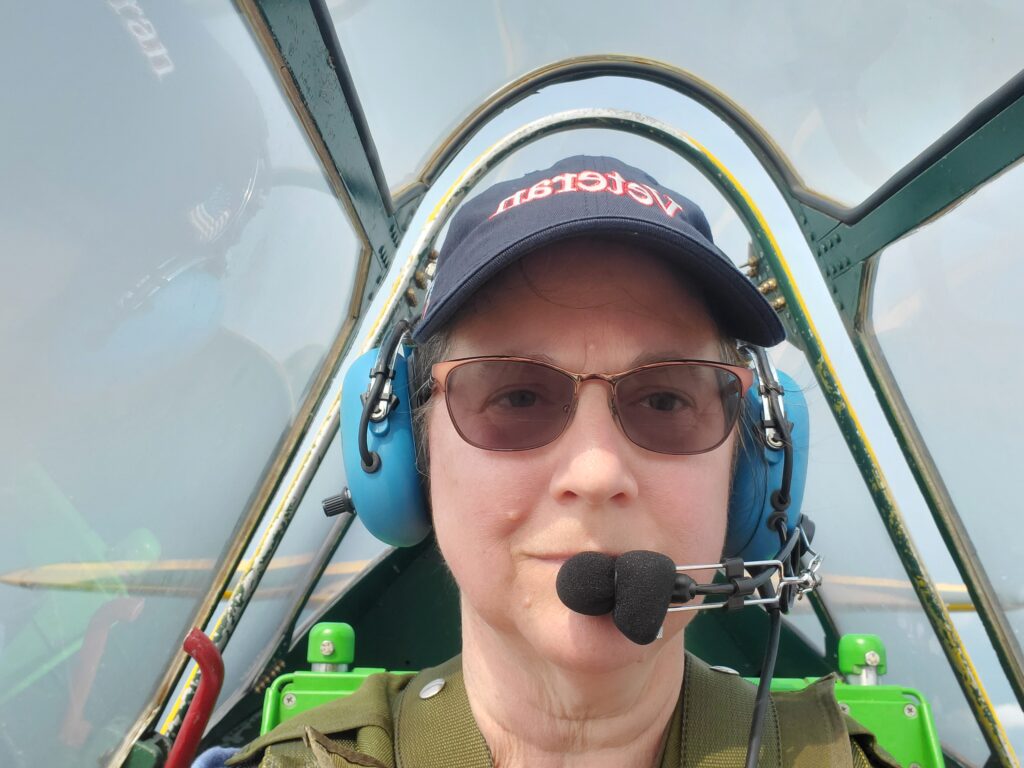
I recently returned from EAA’s AirVenture in Oshkosh, Wisconsin. There is no better place to affirm that general aviation is alive and well! Every year I am amazed at how the aviation community comes together to celebrate what we do for fun while trying to find new methods to keep it safe for all who fly, ride, or look up and watch us.
|
The FAA hangar was hopping with well-attended forums, people asking questions, and on-the-spot hiring, especially for aviation safety inspectors, engineers, and other critical safety positions. In addition, several air traffic control applicants were able to complete hiring tasks to speed up hiring processing and eventual class assignments. More than 250 people were able to experience their hypoxia symptoms in the Portable Reduced Oxygen Training Enclosure or PROTE, and over 1,000 were able to speak directly with medical staff about their cases. Several walked away with a brand-new certificate.
|
We also spread the word on my “3 Es” – Education, Early Intervention, and Evolution of Standards through panels at AOPA, EAA, and in the FAA Forums while foot stomping the Preflight Your Medical message.
|
On a personal note, I tried something different this year… I stayed in the Warbird camping area instead of a hotel! I was able to interact with other pilots and aircraft owners one-on-one in a relaxed environment, be it watching the night show, sharing a meal, or waiting in line at the shower trailers. I was able to speak with people who built their own planes and flew them to Wisconsin. Needless to say, I learned a lot from people who shared their experiences, challenges, and the joy of flight freely without asking who I was. The week was a true back-to-basics on the group of people who slip the surly bonds of earth with reverence.
|
|
Dr. Susan Northrup — GAJSC Co-Chair
|
|
|
|
General Aviation Safety Performance Update
|
|
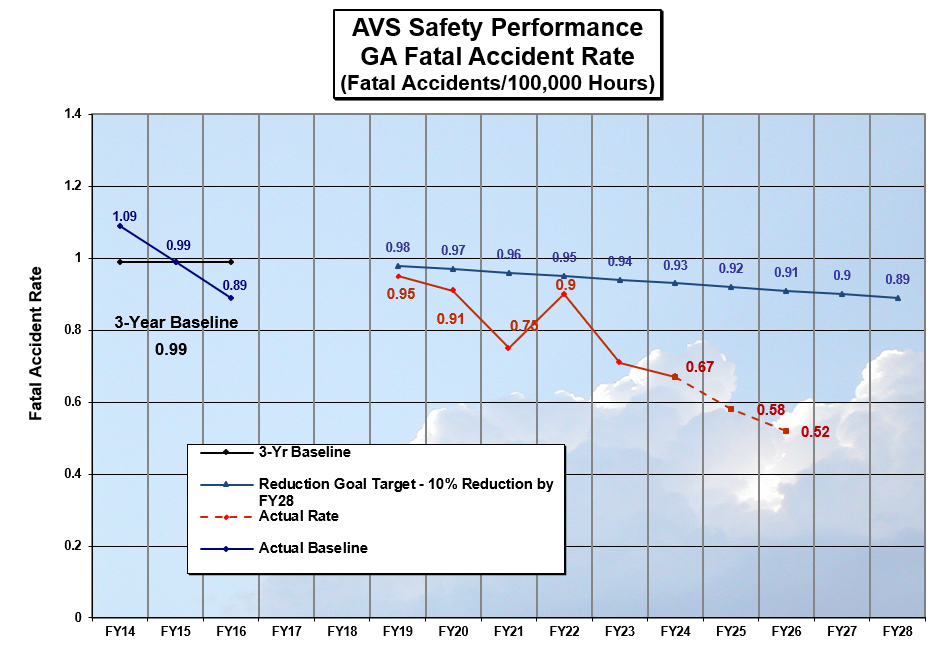
Here's a look at the GA fatal accident rate so far for fiscal year (FY) 2026. As you can see in the chart here, the estimated GA fatal accident rate is at 0.52 accidents per 100,000 flight hours (as of Aug 24, 2026), well below the yearly reduction target of 0.91. You can also see the total GA fatal accidents broken out by month in FY26 here (as of July 2026).
|
|
For more details, see the Pareto chart on general aviation fatal accidents, which can be customized to display a specific date range of accident data and sort results by aircraft classification, FAR part, operational category, and accident category.
|
|
|
|
|
|
Partnering for GA Safety
|
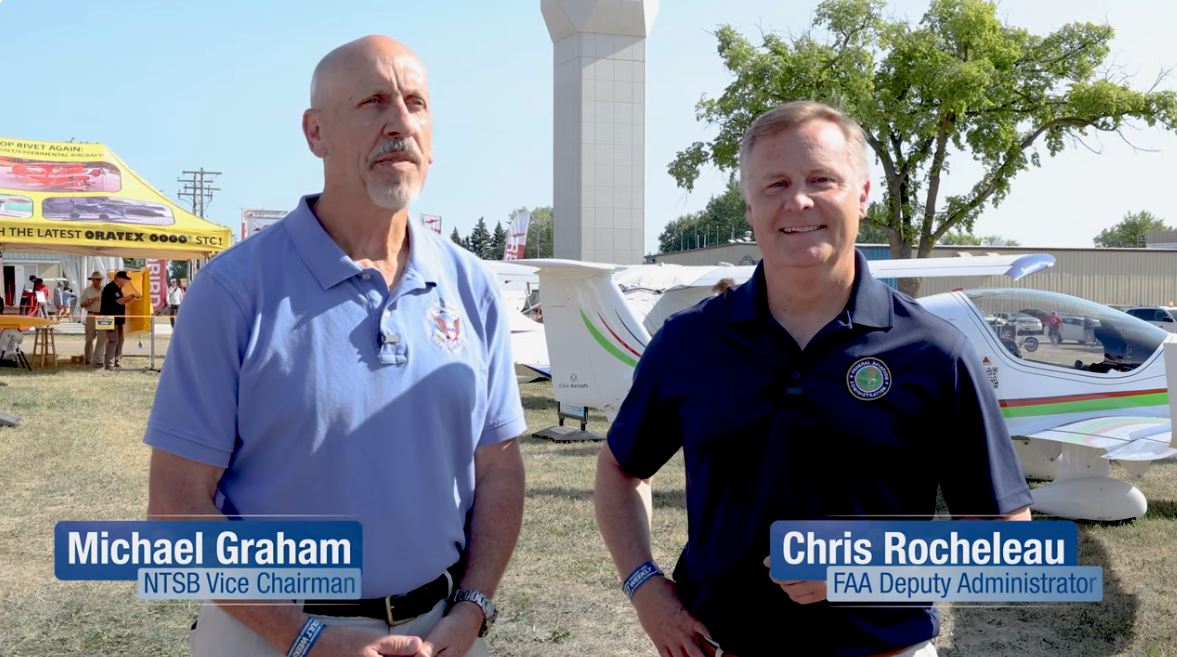
“Safety is a shared responsibility.” At EAA AirVenture, former FAA Deputy Administrator Chris Rocheleau and NTSB Vice Chairman Michael Graham discussed how collaboration between government and industry is driving results in general aviation safety. Through the General Aviation Joint Safety Committee (GAJSC), the FAA, NTSB, and industry experts analyze data to target leading risk factors, including loss of control in flight. Thanks to enhanced pilot training, best practices for aircraft owners, and safety tech like angle of attack indicators, 2025 saw the lowest GA fatal accident rate on record, with 2026 trending even lower. See the video here.
|
|
|
|
|
|
New Rotorcraft Collective Videos Highlight How to
Maintain Flightpath Safety and Master the Helicopter ACS
|
Ensuring the aircraft is on a safe and correct flightpath is the highest priority for all pilots. It only takes a moment of inattention to create a tragic accident, and errors can occur in any phase of flight. You can learn more about flightpath management in the latest Rotorcraft Collective video "Put Your Flightpath First" here.
|
|
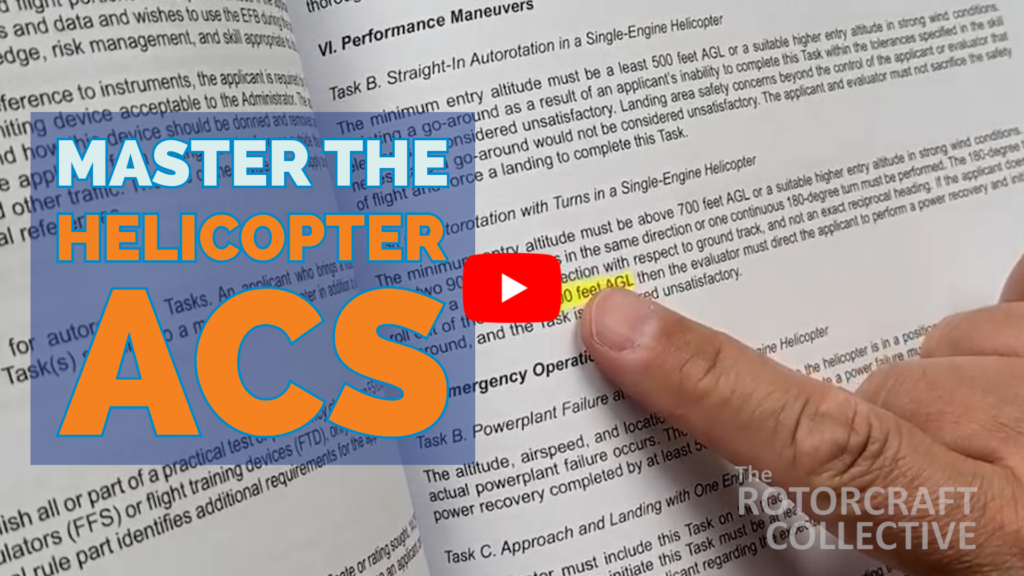
In another new video, USHST's Chris Bauer and DPE Matt Johnson explain how the Airman Certification Standards help pilots prepare for practical tests. They detail the structure of these standards, the importance of knowledge, risk management, and skill elements, and how to utilize the provided appendices and coding system to achieve success during flight evaluations. Watch "Mastering the ACS" here.
|
|
|
|
|
|
|
|
NASA's Aviation Safety Reporting System Celebrates 50 Years
Last April, NASA’s Aviation Safety Reporting System (ASRS) celebrated 50 years of continuous operations. The safety reporting system and repository for “NASA forms” has grown and flourished for half a century and has helped mold our National Airspace into a safer aviation environment.
|
The April 2026 edition of the ASRS' CALLBACK newsletter recalls the program's history and its successes in the tradition of nurturing a robust aviation safety culture that strives for excellence and continuous improvement.
|
For more information on ASRS or to file a report, click here. The program ensures confidentiality and anonymity. Also note that reports submitted can’t be used in any disciplinary action, except for information concerning certain criminal offenses or accidents.
|
|

|
|
|
|
|
Safety Enhancement Spotlight — Pilot Response to Unexpected Events
The GAJSC analyzes general aviation (GA) safety data to develop intervention strategies to prevent or mitigate problems associated with accident causes, called Safety Enhancements (SE). These SEs may include procedures, training, and equipment installations that, when implemented, may reduce the likelihood of accidents in the future.
|
In this issue of FlySafe Flyer, we'd like to introduce SE 28 - Pilot Response to Unexpected Events.
|
Among the objectives with this SE is to educate flight instructors and pilots on the need for preparing for unexpected events in the cockpit, focusing on: the importance of briefing for emergencies; positive transfer of controls; recognition and management of “startle response.”
|
Here are a few good resources that emphasize the importance of this SE:
|
|
Please see the GAJSC SE page here for more information.
|
|
|
|
|
|
GAJSC Member Profile — NATA
The National Air Transportation Association (NATA) has been the leading national trade association representing the business interests of general aviation service companies on legislative and regulatory matters at the federal level for more than eight decades. NATA also provides education, services, and benefits to members to help ensure their long-term economic success.
|
See the NATA website for more information. See here for a list of all GAJSC partners.
|
|
|
|
|
|
|
|
Thanks for reading and #FlySafe!
|
|
Partners in Aviation Safety
|
|
|
|
|
We need your feedback! Please tell us what you think.
|
|

|
|
|
|