
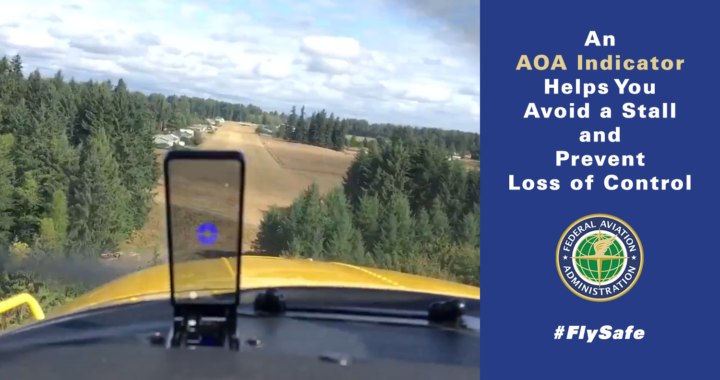
The General Aviation Joint Steering Committee’s (GAJSC) loss of control workgroup believes that a lack of awareness, with respect to angle of attack (AOA), has resulted in the loss of aircraft control and contributed to fatal GA accidents. The GAJSC also maintains that increasing a pilot’s awareness of the aerodynamic effects of AOA and available technology will help reduce the likelihood of inadvertent loss of control.
What is Angle of Attack?
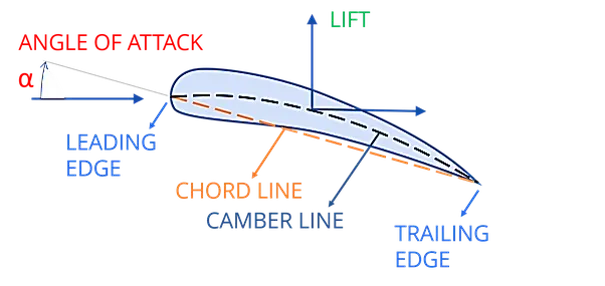
The angle of attack is the angle at which the chord of an aircraft’s wing meets the relative wind. The chord is a straight line from the leading edge to the trailing edge.
What’s So Critical About AOA?
At low angles of attack, the airflow over the top of the wing flows smoothly and produces lift with a relatively small amount of drag. As the AOA increases, both lift and drag increase; however, above a wing’s critical AOA, the flow of air separates from the upper surface and backfills, burbles, and eddies, which reduces lift and increases drag. This condition is a stall, which can lead to loss of control and an abrupt loss of altitude if the AOA is not reduced.
It is important for the pilot to understand that a stall is the result of exceeding the critical AOA, not of insufficient airspeed. The critical AOA is an aerodynamic constant for a given airfoil in a given configuration. The velocity of the relative wind does not matter; the airfoil will ALWAYS stall when the critical AOA is reached.
Please also note that the term “stalling speed” can be misleading, as this speed is often discussed when assuming 1G flight at a particular weight and configuration. Increased load factor directly affects stall speed (as do other factors such as gross weight, center of gravity, and flap setting). Therefore, it is possible to stall the wing at any airspeed, at any flight attitude, and at any power setting.
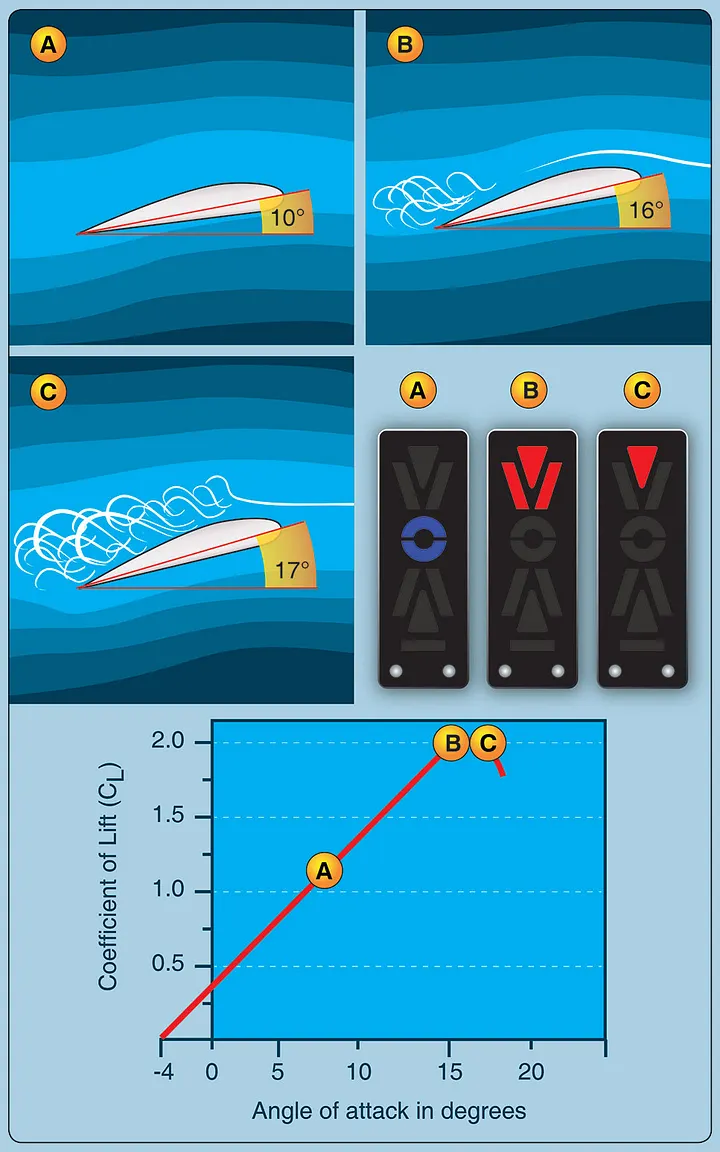
A conceptual representation of an AOA indicator. It is important to become familiar with the equipment installed in a specific airplane.
AOA in Steep Turns
Increased load factor can directly affect stall speed. For example, if a pilot maintains airspeed and rolls into a coordinated, level 60° banked turn, the load factor is 2Gs, and the airplane will stall at a speed that is 40% higher than the straight-and-level stall speed.
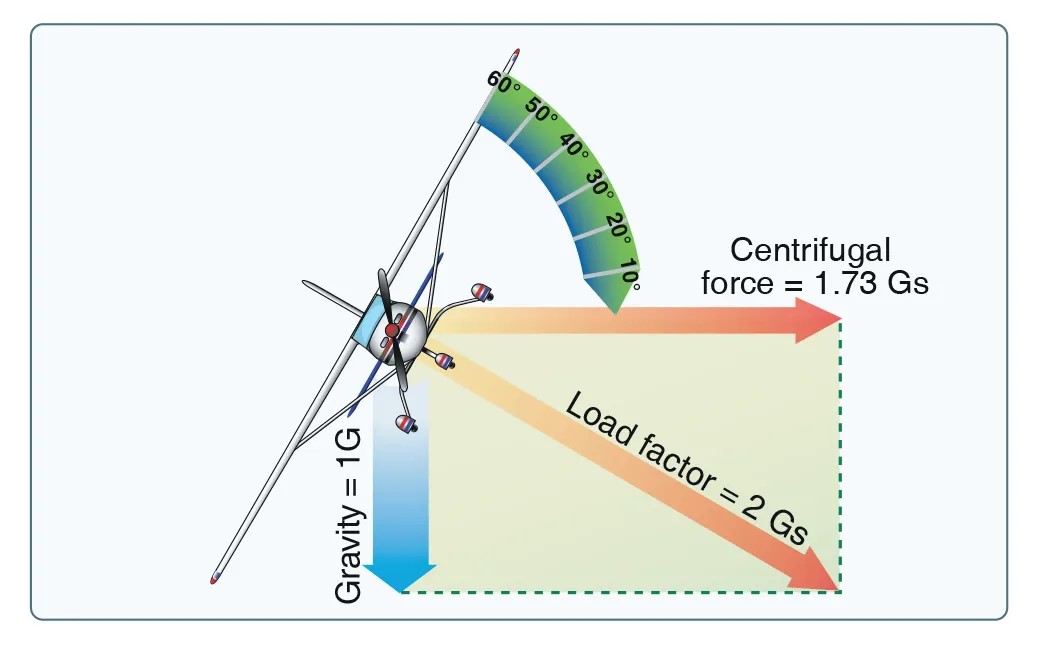
Increased load factor can directly affect stall speed.
Due to the increased aerodynamic loading of the aircraft in a steep turn, the wing is much closer to the critical AOA. Here are a few things you’ll want to remain aware of during a steep turn:
- The increase in pitch angle may be much smaller than expected to stall the wing.
- The indicated airspeed at the critical AOA is significantly higher than in normal flight.
- The increased load (i.e., aerodynamic loading) of the airplane requires greater lift which can be created by increasing airspeed or increasing the AOA.
- Due to the increased aerodynamic loading, the stall sequence is condensed. The progression from indication, to buffeting, to fully stalled can be very rapid.
Make it a point to practice stalls and steep turns at different configurations during your next flight training opportunity.
AOA Indicators
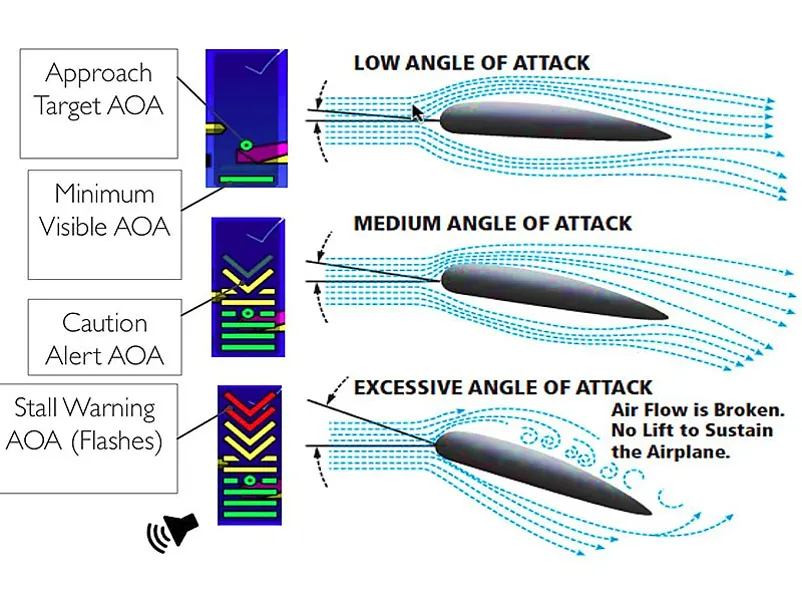
The AOA indicator delivers critical information visually or through an aural tone to indicate the actual safety margin above an aerodynamic stall. The more efficiently the airfoil operates, the larger stall margin that is present. Remember Green — nice and clean; Yellow — extreme caution to the fellow; and Red — your gonna bump your head.
Since we know that stall speed changes with the aircraft’s configuration (e.g., cruise, landing, etc.) and aerodynamic loads, the use of an AOA indicator can help provide a more reliable indication of airflow over the wing, regardless of its configuration. Without it, AOA is essentially “invisible” to pilots.
An AOA indicator can be used to get the pilot’s attention (via audio and/or low-cost stick shakers) even if the pilot is not looking at it. This focuses the pilot’s attention on where it needs to be to avoid the stall. It can also help when used in conjunction with airspeed and existing stall warning systems, when available.
A New Angle on Safety
AOA systems offer many benefits to safe flying so consider looking into one for the aircraft you own or fly. And if you do install one, make sure you’re familiar with its operation and limitations. Pilots are encouraged to conduct in-flight training to see the indications throughout various maneuvers, such as slow flight, stalls, takeoffs, and landings, and to practice the appropriate responses to those indications. It is also important to note that some items may limit the effectiveness of an AOA indicator (e.g., calibration techniques, wing contamination, unheated probes/vanes). Pilots flying an airplane equipped with an AOA indicator should refer to the pilot handbook information or contact the manufacturer for specific limitations applicable to that indicator type.
It’s also a good idea to keep your skills sharp through practice of stalls and slow flight as well as pattern and instrument work with a flight instructor. Be sure to document your achievement in the WINGS Pilot Proficiency Program too. It’s a great way to stay on top of your game. Go to FAASafety.gov for more.
Additional Resources
- FAA Safety Briefing article – Making Flying Safer with AOA Indicators (Jan/Feb 2026)
- FAA Safey Briefing article – Pushing the Envelope: A Plan of “Attack “for Loss of Control (May/Jun 2018)
- FAASTeam 57 Seconds to Safer Flying video, Angle of Attack Awareness
- FAASTeam video on Angle of Attack
- Partnership to Enhance General Aviation Safety, Accessibility, and Sustainability (PEGASAS) video on how certain AOA indicators work in flight
- FAA Advisory Circular 61-67C, Change 2, Stall and Spin Awareness Training