
We’ve come a long way in general aviation (GA) safety, and we should celebrate our part in attaining and maintaining the lowest GA accident rates ever. To continue that success and further lower the rate, we must explore new methods to enhance safety. This includes conducting human factors research to understand how humans succeed and fail, identifying strategies to reduce or eliminate failure risks, and emphasizing the importance of a safety culture.
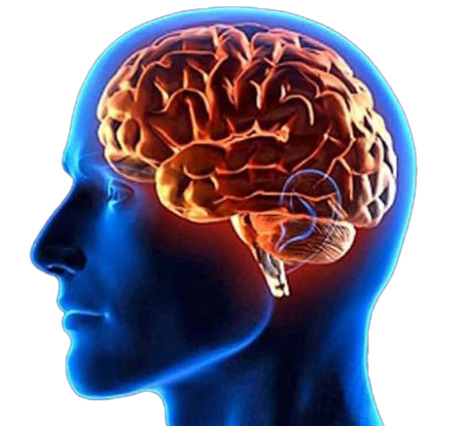
The term “human factors” refers to the wide range of issues affecting how people perform tasks in their work and leisure environments. Human factors knowledge informs human task specifications and complementary system and technology design. Studying human factors and human factors-informed product and process design are producing better informed pilots and more capable aircraft; a combination that yields solid safety results.
So, what do human factors have to do with WINGS? Plenty. Leveraging our understanding of human factors improves our performance, communication, teamwork, situational awareness, and decision-making. Threat and error management recognizes and accommodates human factors strengths and weaknesses. And, understanding how humans process information informs aircraft and systems design and automation. A robust safety culture supports human endeavors in all of these areas. Simply put: “A great safety culture is when people continue to work (and fly) safely and do the right things — even when no one is watching.”
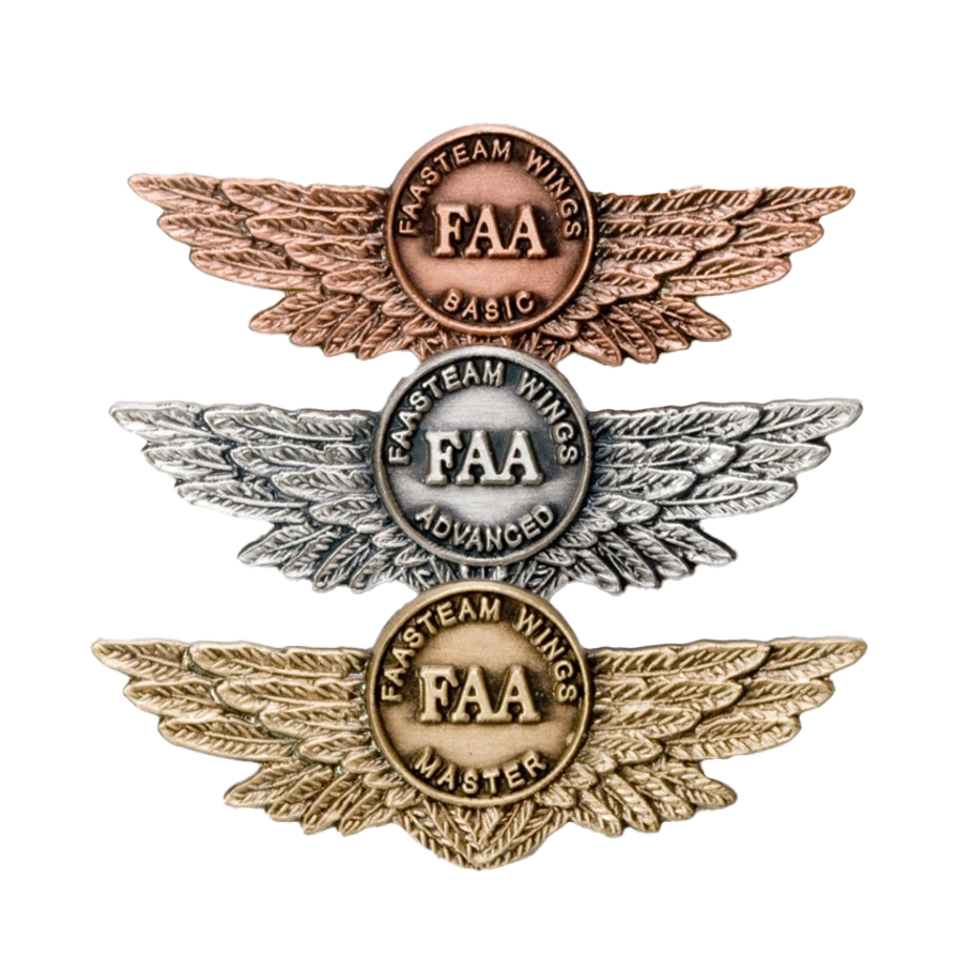
A positive safety culture is the foundation on which the FAA’s WINGS Pilot Proficiency Program is built. WINGS pilots train to proficiency, practice safety risk management (SRM), and adhere to best operational practices. They also improve their operational safety and efficiency through study of lessons learned, and they “walk the talk” promoting safety through their words and actions.
Let’s consider a year’s worth of WINGS proficiency training. When looking at data from fiscal year 2024, we see there were:
- 1,300-plus online courses hosted on FAASafety.gov, more than 600 of which qualify for WINGS credit;
- more than 150,000 online WINGS courses completed;
- 3,183 seminars and 813 webinars sponsored by the FAASTeam and presented to 439,000 attendees; and
- more than 27,000 standard WINGS flight activities completed.
Each WINGS activity supports a collective safety culture and leverages our human factors strengths while compensating for our weaknesses. Here are some ways in which this is accomplished:
WINGS proficiency instruction recognizes human performance capabilities and limitations, as these can directly impact pilot proficiency. Considerations include stress management, proper nutrition and hydration, exercise, and adequate rest and recuperation.
Effective communication is essential to safe, efficient operations, so WINGS instruction provides ample opportunity for pilots to practice critical communication skills like:
- Active listening
- Readback/hear back
- Clarification
- Questioning
- Procedures
- Checklists
WINGS instructors stress single-pilot and crew resource management. They show pilots how to leverage all the considerable resources available to ensure safe flight operations. WINGS pilots learn how to be effective team members and how to captain a team.
Each WINGS flight provides situational awareness challenges and opportunities for improvement. WINGS instructional scenarios require pilots to be well informed and oriented with respect to weather and terrain, aircraft and aircraft systems, and fuel state.
WINGS instructors and pilots practice safety risk management by:
- identifying hazards — conditions, objects, or circumstances that could cause or contribute to an unwanted event;
- determining the risk that hazards will negatively impact flight operations; and
- assessing the severity of consequences if they do.
 Threat and error management (TEM) is one type of risk management methodology taught. TEM is a safety management approach to flying that detects, recognizes, and manages threats (such as adverse weather, terrain, or aircraft equipment malfunctions) and errors (such as unclear communications with fellow crewmembers or controllers, or an improper aircraft configuration). Essentially, TEM teaches pilots to recognize and address small problems before they become big ones.
WINGS training stresses many important elements of sound aeronautical decision-making (ADM), including the use of mnemonics and flight risk assessment tools to better structure ADM. WINGS training scenarios also provide ample opportunity for pilots to see the “big picture” (i.e., situational awareness) and exercise their decision-making skills.
WINGS instruction leverages what we know about human memory and information processing to compensate for biases and errors. It also explores how to identify and mitigate some of the deadly illusions and human startle responses that can occur in flight.
Finally, WINGS training can help educate pilots about the dangers of becoming overly reliant on technology during flight. Human factors knowledge and research shape WINGS training curricula, balancing automation with manual flying and failure mode operation to maintain pilot skill and prevent confusion when automation executes unexpected actions.
Bottom Line
Human factors training is crucial for pilots to enhance safety and decision-making. The FAA’s WINGS program supports this by offering targeted education to improve understanding and management of human limitations and interactions. This training can help pilots become better communicators, decision-makers, crisis managers, teachers, and students. That all adds up to safer, more efficient flight operations.